Connect with us

Financial

Ant Group’s $34.5bn IPO Oversubscribed By $3trn

Published

on

, SiliconNigeria

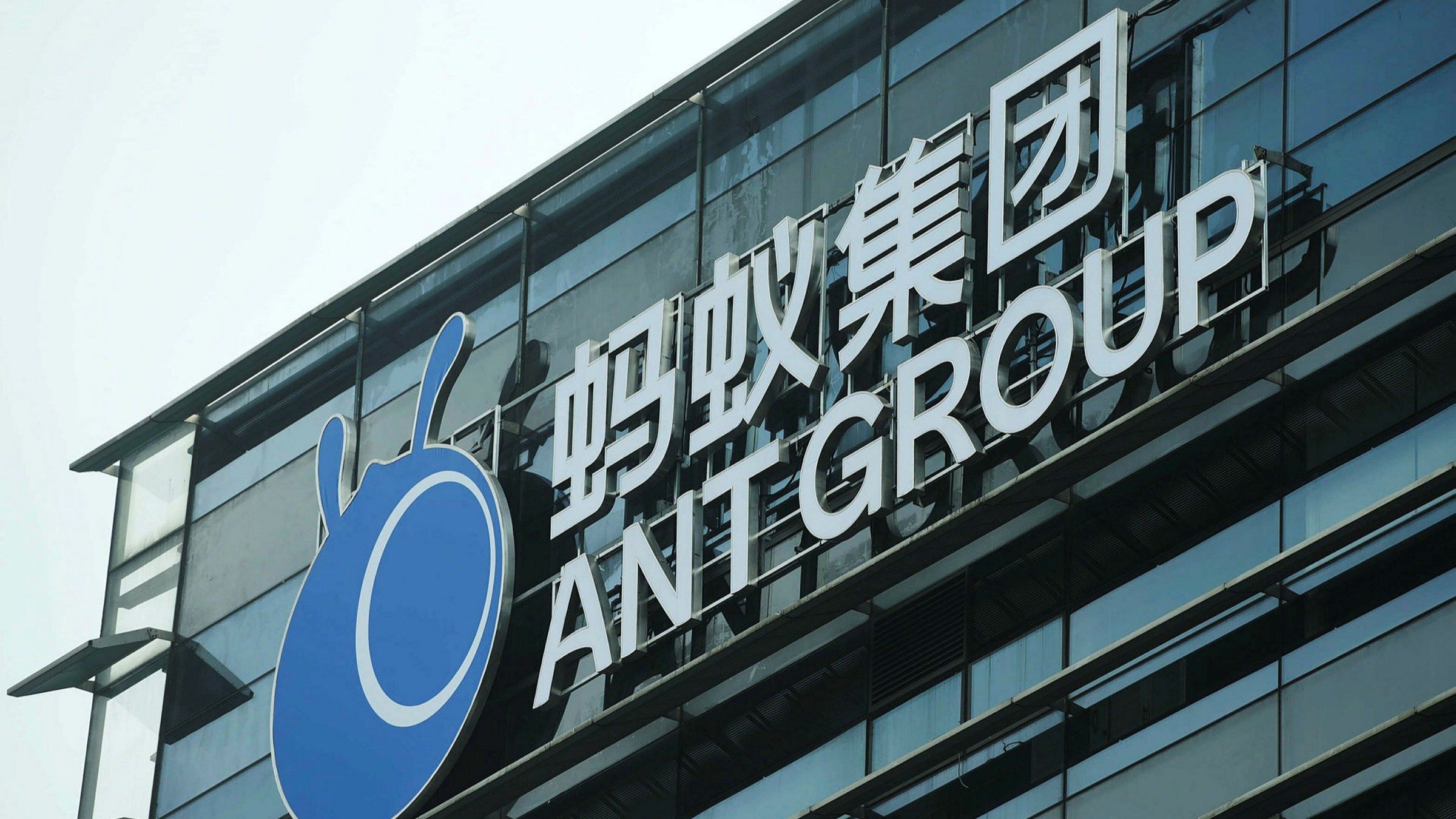
Ant Group raised over $34.5 billion in Hong Kong and Shanghai. The company recorded a huge retail investors bid of $3 trillion which equals the Gross Domestic Product (GDP) of the United Kingdom.

Ant Group, a company that is in charge of the biggest payment platform in China records a mad rush for its stock in its IPO as a huge interest set in among both institutional and retail investors. This is groundbreaking as many speculated that the upcoming U.S. presidential election set next week would have a negative effect on the market.

The company recorded a huge retail investors bid of $3 trillion which equals the Gross Domestic Product (GDP) of the United Kingdom. It is said that Ant Group will continue to be positively impacted by the ongoing digitization of the Chinese Financial Market.

The Ant Group IPO increased by 394 times as nearly 1.5 million retail investors trooped into the market to invest about $167.7 billion equivalent to HK$1.3 trillion as at 11 am local time.

Interestingly, this is said to increase after the book closure at 12:30 pm according to the report. The cash will therefore remain frozen until the stock trading begins on November 5.

The late August M1 data released by the Hong Kong Monetary Authority reveals that the total Money in circulation every day in the local financial system is HK$2.46 billion, which means the Ant Group IPO has obtained more than half of the amount.

Louis Tse Ming-Kwong, the managing director of Wealthy, a Hong Kong-based brokerage expressed his excitement stating that the recorded retail investors obtained by the Ant Group is a historical moment for the Hong Kong security market. He confirmed that the Offering is so hot that over 1 million retail investors have submitted their subscriptions as claimed by a report.

About $2.85 trillion equivalent to HK$19.05 trillion in subscription money was said to have been submitted by retail investors for Ant share offering on the Star Market. This was 872 times oversubscription.

Ant Group raised over $34.5 billion in Hong Kong and Shanghai after offering 1.67 billion shares each to become the biggest Initial Public Offering in the world. The IPO is expected to increase to $39.67 billion when the 15% over-enrollment in each leg is included. According to Tse, Ant may have a lot of avenues to even grow bigger if it extends Alipay to the overseas market as there are a lot of people using digital payment.

Gordon Tsui, the Hong Kong Security Association chairman, revealed that many people are buying the shares because its valuation is relatively cheaper than foreign payment companies.

Ant Group is an affiliate of Alibaba Company Holding Limited and an operator of the Alipay. The Hong Kong and Shanghai Banking Corporation (HSBC) has also revealed that they have a record increase in the application of IPO loan and IPO application uptake for Ant Group.

They are very successful because they set aside about HK$150 billion loans for their customers to be able to subscribe to its shares. This loan mostly has an interest rate of 0.48% to 0.88%. Also, about HK$383.51 billion has entered the local financial market, being an advantage to the company.

Source: Coinspeaker

Continue Reading
Advertisement Advertisement
Click to comment

Leave a Reply

Your email address will not be published. Required fields are marked *

Financial

Adopting AI Responsibly in Public Finance

Published

on

, SiliconNigeria

Artificial intelligence (AI) is rapidly evolving from automating routine tasks to becoming a predictive—and even prescriptive—tool in public finance. At Thursday’s New Economy Forum Workshop, two panels explored how AI and GovTech are being used across governments, and how to scale responsibly while pushing innovation forward.  

“It’s not about getting one big thing right… [it’s about] getting 32 million things right,” said Edward Kieswetter, Commissioner of the South African Revenue Service. Since introducing AI tools like chatbots, biometric facial recognition for e-filing registration, and web-based assistance, South Africa has added $18 billion to its fiscal year revenue. Kieswetter pointed to three key gains: streamlining services for taxpayers, stronger compliance and fraud prevention, and most notably, increased public trust. 

Across OECD countries, “there is no single or even preferred model [of adoption]”, said Delphine Moretti, Working Party Lead on Public Financial Management and Reporting for the OECD. Governments are using AI to forecast economic trends and help inform spending decisions. France and Indonesia, for instance, use AI to monitor fiscal risk at the subnational level through accounting data. Still, oversight bodies, public financial management frameworks, and communities of practice are critical to help manage risk and ensure that innovation leads to real gains. 

In Brazil, AI is also being leveraged for fiscal education. Tania Gomes, Coordinator for Data, Products and Digital Transformation, Treasury of Brazil, showcased “Talk to SICONFI”, a generative AI agent that answers queries on public fiscal data across federal, state, and local levels. Promoting training and digital literacy for AI is just as essential, she added. 

AI tools can be scaled broadly at extremely low costs, but doing so requires strong risk management frameworks and agile governance, says David Hadwick, a researcher at the Centre of Excellence ‘Digitax’. Spanish Tax Agency’s Chief Information Officer, José Borja Tomé, illustrated this with the agency’s “test-and-pause” approach, underscoring that “assigning responsibility is key”. 

Panelists agreed that policies guiding AI use in public finance should prioritize transparency, fairness, efficiency, and use trusted, high-quality data. Increasingly so, “the metrics of AI ethics correspond to the metrics of performance for these administrations,” Hadwick added.

Culled from IMF.org

Continue Reading

Africa Region

Standard Chartered Joins Temenos Partner Programme

Published

on

, SiliconNigeria

Through the integration, financial institutions (FIs) on the Temenos platform will benefit from a faster go-to-market in accessing the Standard Chartered’s extensive currencies offering, allowing them to price services across more than 130 currencies and 5,000 currency pairs while managing exposure risks to FX market volatility.

The integration releases the strain on inhouse technology resources, which is considered beneficial for retail banks, wealth managers and payment providers handling low-value or high-volume transactions that sit outside their treasury function.

Continue Reading

Financial

Global Payments to Acquire Worldpay for $22.7bn

Published

on

, SiliconNigeria
  • The payments sector is getting a major shakeup, with Global Payments agreeing a $22.7 billion deal to acquire Worldpay from GTRC and FIS while offloading its Issuer Solutions business to FIS for $13.5 billion.

Global Payments says Worldpay provides highly complementary payments, software and commerce enablement technology to merchants and partners worldwide. On a combined basis, the company will serve more than six million customers and enable approximately 94 billion transactions and $3.7 trillion in volume across more than 175 countries.

Cameron Bready, CEO, Global Payments, says: “The acquisition of Worldpay and divestiture of Issuer Solutions further sharpen our strategic focus and simplify Global Payments as a pure play merchant solutions business with significantly expanded capabilities, extensive scale, greater market access and an enhanced financial profile.”

Continue Reading

Popular News