Connect with us

Top Stories

81% of Nigeria Consumers Shop More Online Since Start of Pandemic-Mastercard Study

Published

on

, SiliconNigeria

A Mastercard study on consumer spending* has revealed that over four out of five (81%) consumers in Nigeria are shopping more online since the onset of the COVID 19 pandemic.

Data, apparel, beauty products and FMCG (fast-moving consumer goods), have seen the highest surge of online activity. More than 90% of Nigeria consumers said they had purchased data top-ups online while 64% shopped more online for clothing, 56% for beauty products, with gifts, books and groceries tying equally at 51% each.

With fewer opportunities to browse in the store or on the high-street, social media has emerged as the main platform for finding the most attractive products and offers, with 71% and 64% of respondents saying they had discovered new sellers through Facebook and Instagram respectively. In fact, 78% of typical in-store bargain hunters said they spend hours searching different sites to find the best deals.

When it comes to paying for goods or services online, speed is a key factor for Nigeria shoppers, with 79% quoting this as a major consideration when choosing a business to buy from.

The Rise of Virtual Experiences

While adapting to the ‘next normal’, people have been changing the way they consume entertainment and learn new skills.

In fact, 87% of Nigeria consumers said they were using the downtime as a positive learning experience. More than half of the respondents (61%) said they had taken a virtual cooking class, 59% learnt to manage their health and get medicines online, 29% have been mastering a new language and 35% have been learning to dance online.

51% of respondents have been educating themselves on Do-It-Yourself (DIY) projects, and just over a third (38%) said they have been learning how to film online.

It is clear from the research that shoppers are rapidly moving away from more traditional forms of retail and opting for contact-free and digital transactions. This, in turn, is presenting e-tailers and businesses in Nigeria and across the region, with new challenges on how to best leverage the shift towards online shopping and deliver fast, convenient and secure transactions.

“There’s no doubt that the way we live and shop has drastically changed as a result of the pandemic. With the surge in online shopping in Nigeria, businesses need to optimize their operations to ensure they consistently deliver convenient, enjoyable and secure transaction experiences to their customers. At Mastercard, we are leveraging our network, insights, technology and partnerships with fintechs, banks and other key players across Nigeria to support businesses as they make the most of this new reality,” said Ebehijie Momoh, Senior Vice President, Mastercard West Africa.

Securing New Shopping Habits

With the rapid rise in online shopping, consumers are also becoming increasingly aware of the associated risks. And, with 82% of consumers now managing their banking needs online, more than half (68%) have said that a secure checkout was fundamental for a good shopping experience.

This is a key priority for Mastercard, as it is working to reduce online fraud and protect retailers from data breaches, while ensuring that consumers still enjoy a convenient and hassle-free payment experience.

To advance these efforts, Mastercard recently rolled out its patented tokenization technology across the region. Tokenization encrypts consumer data by replacing card numbers with digital tokens. This prevents improper usage at any other location and provides additional security and peace of mind for consumers and merchants alike, resulting in higher approval rates while minimizing online fraud.

Continue Reading
Advertisement Advertisement
Click to comment

Leave a Reply

Your email address will not be published. Required fields are marked *

Action

MTN Foundation Launches Skills Academy to Train 3 Million Nigerians

Published

on

, SiliconNigeria

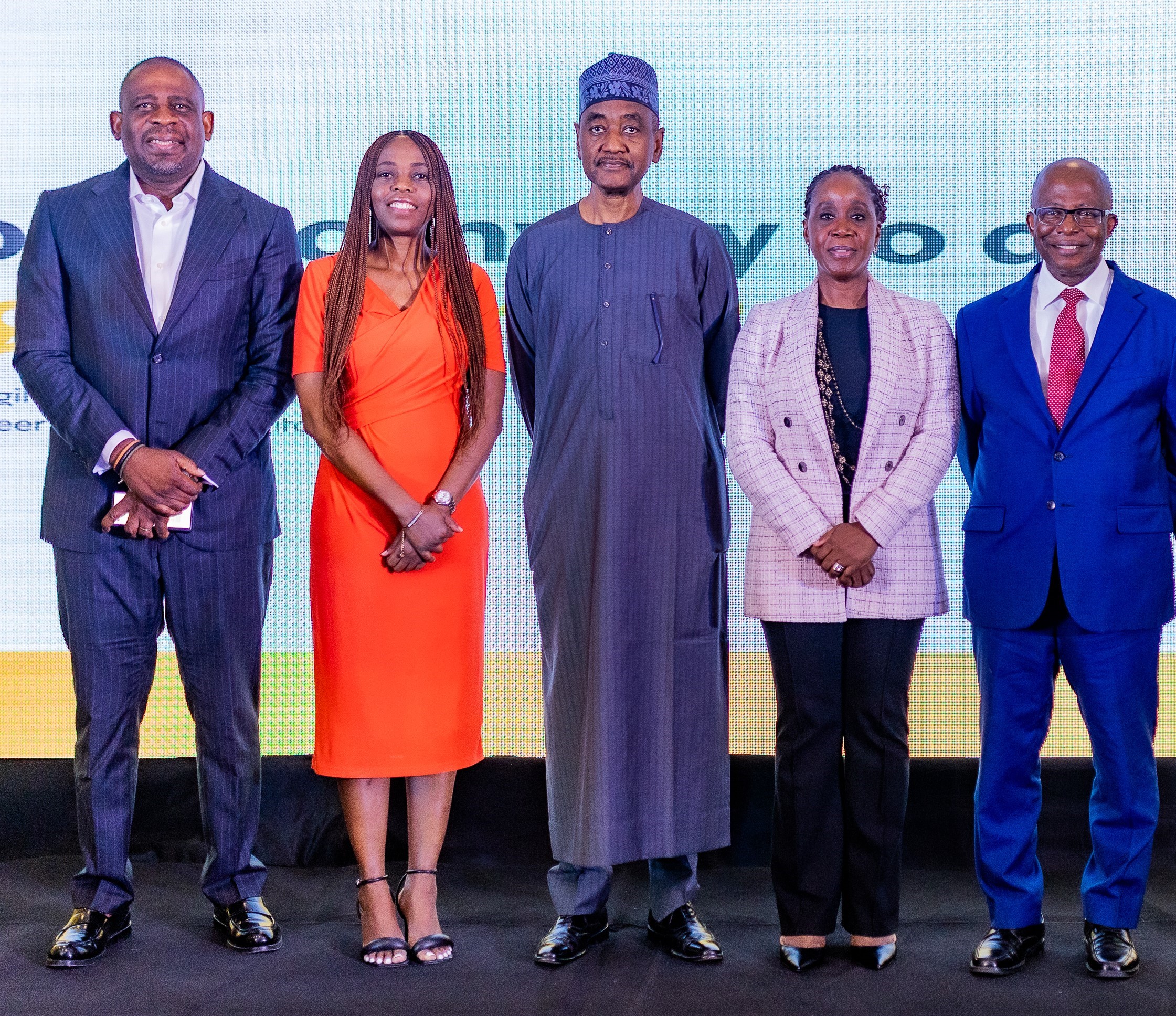
The MTN Foundation has officially launched its Skills Academy, a transformative digital learning platform designed to empower millions of Nigerians with access to digital and financial skills essential for the 21st-century economy. The launch event, held at the Transcorp Hilton in Abuja, brought together top government officials, education stakeholders, and technology experts, reinforcing the importance of public-private collaboration in building a digitally inclusive Nigeria.

The platform, available at skillsacademy.mtn.com, is open to individuals aged 13 and above, whether in school, recently graduated, self-employed, or unemployed. It also features a career guidance tool to help secondary school students and other users explore pathways aligned with their strengths and market demand.

With youth unemployment over 6% and more than 18.3 million children out of school, according to the latest data from the National Bureau of Statistics (NBS) and the United Nations Children’s Fund (UNICEF), Nigeria faces a pressing need to close the digital skills gap. The Skills Academy directly responds to this challenge by offering free, self-paced courses and certifications in high-demand areas such as data analysis, software engineering, digital marketing, and project management.

In her welcome address, Dr. Mosun Belo-Olusoga, Chairman of the MTN Foundation (represented by Simon Aranonu, Director of the MTN Foundation), stated, “We believe digital skills are a truly powerful asset. No Nigerian youth or child should be left behind because of their socioeconomic background. This platform is designed to provide world-class learning experiences, helping Nigerian youth thrive and become future leaders.” To date, the platform has over 7,000 people learning and over 3,000 courses completed, setting a strong foundation for nationwide scalability.

The Honourable Minister of Communications, Innovation and Digital Economy, Dr. Bosun Tijani, in his keynote, described the platform as “unique and critical.” “Nigeria is a country that is extremely blessed. With an average age of just 16.9, we are one of the youngest populations in the world. This program is not just about training; it’s about equipping a generation that will drive innovation, deepen our economy, and position Nigeria as a net exporter of tech talent,” the Minister commented.

Odunayo Sanya, Executive Director of the MTN Foundation, added, “We are focused on building Africa’s largest digital talent pipeline. Through relevant and practical courses across various disciplines, offered in collaboration with the global e-learning platform Coursera, this web-based training system will be instrumental in promoting a digitally skilled workforce.”

This initiative is part of the MTN Foundation’s broader Digital Skills for Digital Jobs programme, which aligns with the Nigerian Government’s National Digital Economy Policy and Strategy (NDEPS) and Sustainable Development Goal 4: Quality Education.

Continue Reading

Action

Mike Adenuga@72: The Man Who Democratized Mobile Telephony in Nigeria

Published

on

, SiliconNigeria

The Guru. Visionary. Pacesetter. Colossus. Transformer.

Happy birthday to Otunba Dr. Mike Adenuga (Jnr.), Chairman of Globacom and Conoil PLC as he marks his 72 years birthday on Tuesday April 29, 2025. Cheers to one Nigerian who bestrides the African business landscape.

A special gift to Nigeria, he is renowned for his business acumen. When it is comes to business, he’s got the vision. He can see good fortune light years ahead while others are still pandering whether it is feasible.

, SiliconNigeria

Dr. Mike Adenuga (Jnr.) is unafraid to venture where others fear to tread.  Fondly called ‘The Bull’ for his fearless and zeal. He’s got this Midas touch that is unparalleled. His boundless energy, philanthropy, native intelligence and wisdom combined stand him out, enabling him to see ahead of others the right sectors and businesses to invest and transform.

Changing Telecom Services Narrative

If there is anyone who single-handedly transformed Nigerian telecommunications industry, that person is no other than Dr. Mike Adenuga (Jnr.). His tenacity to recover his Digital Mobile Licence (DML) which his company won in 2001 mobile auction but was illegally taken away from him, paid off in 2002 when his company, Globacom won the Second National Operator (SNO) licence.

In September 2003, Globacom transformed the Nigerian telecoms market in particular and Africa in general by being the first Global System for Mobile Communication (GSM) operator to launch operations with Per Second Billing, Multimedia Service (MMS), Mobile Internet, in additional to plethora of communications suites simultaneously.

Glo crashed the price of Subscriber Identification Module (SIM) card, leaving other foreign mobile networks scratching their heads in the GSM wars that changed the face of telecom, bringing down the price of SIM Card from N50,000 down to N100 and later to One Naira (N1) only.

Millions of Nigerians became overnight owners of mobile phones lines courtesy of the competition engendered by Glo. Every major step Glo took from the day it commenced operation, other mobile competitors were jittery, helpless and followed the initiative in other to remain in the market.

After establishing the footprints of Glo in Nigeria, Dr. Mike Adenuga (Jnr.), also took the telecom giant to Ghana and Benin Republic with mobile operating licences in those countries. Unsatisfied with the routing of calls from Africa countries to Europe then back to Africa, he built Glo-1, the first international submarine cable system that was solely financed by an individual. Today, Glo-1 links global telecom networks, data centres, banks and Interconnect houses to millions of businesses across the world.

Globacom has going a notch higher with Glo-2 ensuring that Nigerian cities, towns and villages and oil companies are connected to terrestrial fibres through its landing stations in Lagos and Niger Delta.

, SiliconNigeria

Digital Financial Services

Dr Adenuga (Jnr.), a man who can see opportunities from afar, has took the lead in procuring Super-Agent licence for Agency Banking and Mobile Money licence from the Central Bank of Nigeria (CBN) with the establishment of Glo Mobile Money and Money Master Payment Service Bank Limited, a Digital Bank delivering financial inclusion services to Nigerians especially in rural, semi-rural and urban areas thus connecting them to the formal sector.

Oil, Gas Transformations

 He transformed the face of Nigerian oil, banking, and telecommunications industries. In 1991, when oil mining and production was controlled by foreign multinational companies (MNCs), Dr. Adenuga’s (Jnr.) indigenous oil company was the first to start drilling crude oil. Today, Conoil has metamorphosed into one of the largest African-owned oil conglomerates on the continent with footprints in the upstream, midstream and downstream of the oil and gas sector. 

His forays into the bank industry are well documented where he brought a fresh energy and bespoke financial services with Devcom Merchant Bank and Equatorial Trust Bank (ETB) which later merged into Sterling Bank.

Man flowing with Milk of Human Kindness

The humanitarian side of this famous Nigerian billionaire is incomparable. Although, coming from a middle-class family, Dr. Mike Adenuga’s (Jnr.) academic sojourn in the United States of America and the everyday life lessons internalized from his parents, Chief Michael Agbolade Adenuga (Snr) and Madam Oyindamola Adenuga, shaped his worldview and brought out his humane side in the way he deals with people and businesses.

He has been a major supporter of sports, especially football (Nigerian national teams). He has massively sponsored the Confederation of African Football (CAF) Awards for many years. He was honoured the title of Pillar of Football in Africa for his strong support for African Football at both national and continental. He has quietly rendered support to many without seeking media attention.
Through him, Glo sponsors the annual Ojude Oba festival in Ijebuland and also the Ofala festival in Onitsha, Anambra amongst others, promoting Nigeria’s rich culture. He has been major supporting of the Nigerian entertainment industry, turning many Nigerian and Ghanaian actors into instant millionaires through the Glo Ambassador programme.

A lover of education and the arts, Dr. Mike Adenuga (Jnr.) through his companies has sponsored several initiatives such as Glo Campus, and offered scholarships to thousands of the downtrodden to pursue their academic dreams.

 Humble Beginnings

A man of outstanding wisdom, Dr. Mike Adenuga (Jnr.) was born Michael Adeniyi Agbolade Ishola Adenuga on April 29, 1953 at Ibadan, Oyo State. His father was a school teacher while his mother was an outstanding businesswoman.

Dr. Adenuga (Jnr) is an alumnus of the famous Ibadan Grammar School, North Western State University, Alva Oklahoma; and Pace University, New York, both in the United States of America where he majored in business administration with emphasis in marketing. As a student in the USA, he supported himself with jobs as a taxi driver and security guard.

Dr. Mike Adenuga (Jnr) is a visionary leader, an outstanding entrepreneur and and manager of people and resources. He is a man of uncommon intellect and wisdom have helped him overcome difficult times. Today, he sits atop a vast telecom, oil and gas (Conoil), banking and real estate investments.

As Dr. Mike Adenuga (Jnr) clocks 72 years on Tuesday April 29th, 2025, SiliconNigeria.ng wishes him a marvelous birthday and many happy returns in good health in the service of the fatherland.

Continue Reading

Financial

Adopting AI Responsibly in Public Finance

Published

on

, SiliconNigeria

Artificial intelligence (AI) is rapidly evolving from automating routine tasks to becoming a predictive—and even prescriptive—tool in public finance. At Thursday’s New Economy Forum Workshop, two panels explored how AI and GovTech are being used across governments, and how to scale responsibly while pushing innovation forward.  

“It’s not about getting one big thing right… [it’s about] getting 32 million things right,” said Edward Kieswetter, Commissioner of the South African Revenue Service. Since introducing AI tools like chatbots, biometric facial recognition for e-filing registration, and web-based assistance, South Africa has added $18 billion to its fiscal year revenue. Kieswetter pointed to three key gains: streamlining services for taxpayers, stronger compliance and fraud prevention, and most notably, increased public trust. 

Across OECD countries, “there is no single or even preferred model [of adoption]”, said Delphine Moretti, Working Party Lead on Public Financial Management and Reporting for the OECD. Governments are using AI to forecast economic trends and help inform spending decisions. France and Indonesia, for instance, use AI to monitor fiscal risk at the subnational level through accounting data. Still, oversight bodies, public financial management frameworks, and communities of practice are critical to help manage risk and ensure that innovation leads to real gains. 

In Brazil, AI is also being leveraged for fiscal education. Tania Gomes, Coordinator for Data, Products and Digital Transformation, Treasury of Brazil, showcased “Talk to SICONFI”, a generative AI agent that answers queries on public fiscal data across federal, state, and local levels. Promoting training and digital literacy for AI is just as essential, she added. 

AI tools can be scaled broadly at extremely low costs, but doing so requires strong risk management frameworks and agile governance, says David Hadwick, a researcher at the Centre of Excellence ‘Digitax’. Spanish Tax Agency’s Chief Information Officer, José Borja Tomé, illustrated this with the agency’s “test-and-pause” approach, underscoring that “assigning responsibility is key”. 

Panelists agreed that policies guiding AI use in public finance should prioritize transparency, fairness, efficiency, and use trusted, high-quality data. Increasingly so, “the metrics of AI ethics correspond to the metrics of performance for these administrations,” Hadwick added.

Culled from IMF.org

Continue Reading

Popular News