Connect with us

Financial

Stanbic IBTC Outlines Strategies For Safeguarding Financial Future

Published

on

, SiliconNigeria

As the world continues to adapt to the ‘new normal’  inspired by the COVID-19 pandemic, Nigeria’s leading financial services provider, Stanbic IBTC Holdings PLC, a member of Standard Bank Group, has outlined strategies for businesses and individuals to safeguard their financial future in these uncertain times.

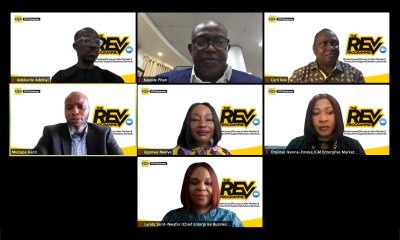
Obinna Lewis-Asonye, Zonal Head, Micro Pension & Agency, Stanbic IBTC Holdings PLC, stated this during the session tagged: “Safeguarding Your Financial Future in Uncertain Times” at the ongoing Higher Institution Football League (HiFL) Masterclass series, sponsored by Stanbic IBTC.

Lewis-Asonye said that the effect of the COVID-19 pandemic has led to an increase in global inflation index and higher cost of living. He noted that the fiscal and monetary policy measures taken by most developed nations affect global liquidity and financial markets by increasing appetite for stocks and the need for a recovery of equity markets across the globe.

“In Nigeria, inflation and the cost of living have skyrocketed, especially during the pandemic, as people were forced to hold on to what they had. Despite the easing of the lockdown, the cost of living remains on a high side, necessitating concrete and deliberate measures to scale through these tough times”, he said.

Speaking on how businesses and individuals can safeguard their financial future amid these uncertain times, Lewis-Asonye advised Nigerians to have a pension and insurance plan, ensure financial discipline and frugality to boost savings, have a mental and health wellbeing plan and ensure diversification of investments.

According to Lewis-Asonye, it is important to digitize activities, invest in foreign-denominated securities, especially the Stanbic IBTC Dollar mutual fund (SIDF) and seek professional investment advice, when needed.

Furthermore, he advised Nigerians to follow robust business models, have emergency/adequate back-up plans, imbibe digital skills to remain relevant and always prepare for the future by having a valid will, which secures their estates for their beneficiaries albeit loved ones, in the event of uncertainties.

Lewis-Asonye also noted that Stanbic IBTC provides comprehensive financial services to its customers in a bid to help them thrive during these tough times. “Aside from offering a full range of financial solutions which include banking, stocks, insurance brokerage, pension, asset management, trusteeship, amongst others; we have also made life easier for our esteemed customers by upgrading our mobile App to bring all these services to their fingertips and enhance their financial capabilities,” he added.

He further reiterated that the Stanbic IBTC Super App, which can be downloaded on Google Play store for Android phones, App Store for iOS phones and from the Stanbic IBTC official website; www.stanbicibtc.com, gives customers the capability to monitor their stocks, mutual funds, pensions and insurance, in addition to carrying out basic banking functions.

Continue Reading
Advertisement Advertisement
Click to comment

Leave a Reply

Your email address will not be published. Required fields are marked *

Financial

Adopting AI Responsibly in Public Finance

Published

on

, SiliconNigeria

Artificial intelligence (AI) is rapidly evolving from automating routine tasks to becoming a predictive—and even prescriptive—tool in public finance. At Thursday’s New Economy Forum Workshop, two panels explored how AI and GovTech are being used across governments, and how to scale responsibly while pushing innovation forward.  

“It’s not about getting one big thing right… [it’s about] getting 32 million things right,” said Edward Kieswetter, Commissioner of the South African Revenue Service. Since introducing AI tools like chatbots, biometric facial recognition for e-filing registration, and web-based assistance, South Africa has added $18 billion to its fiscal year revenue. Kieswetter pointed to three key gains: streamlining services for taxpayers, stronger compliance and fraud prevention, and most notably, increased public trust. 

Across OECD countries, “there is no single or even preferred model [of adoption]”, said Delphine Moretti, Working Party Lead on Public Financial Management and Reporting for the OECD. Governments are using AI to forecast economic trends and help inform spending decisions. France and Indonesia, for instance, use AI to monitor fiscal risk at the subnational level through accounting data. Still, oversight bodies, public financial management frameworks, and communities of practice are critical to help manage risk and ensure that innovation leads to real gains. 

In Brazil, AI is also being leveraged for fiscal education. Tania Gomes, Coordinator for Data, Products and Digital Transformation, Treasury of Brazil, showcased “Talk to SICONFI”, a generative AI agent that answers queries on public fiscal data across federal, state, and local levels. Promoting training and digital literacy for AI is just as essential, she added. 

AI tools can be scaled broadly at extremely low costs, but doing so requires strong risk management frameworks and agile governance, says David Hadwick, a researcher at the Centre of Excellence ‘Digitax’. Spanish Tax Agency’s Chief Information Officer, José Borja Tomé, illustrated this with the agency’s “test-and-pause” approach, underscoring that “assigning responsibility is key”. 

Panelists agreed that policies guiding AI use in public finance should prioritize transparency, fairness, efficiency, and use trusted, high-quality data. Increasingly so, “the metrics of AI ethics correspond to the metrics of performance for these administrations,” Hadwick added.

Culled from IMF.org

Continue Reading

Africa Region

Standard Chartered Joins Temenos Partner Programme

Published

on

, SiliconNigeria

Through the integration, financial institutions (FIs) on the Temenos platform will benefit from a faster go-to-market in accessing the Standard Chartered’s extensive currencies offering, allowing them to price services across more than 130 currencies and 5,000 currency pairs while managing exposure risks to FX market volatility.

The integration releases the strain on inhouse technology resources, which is considered beneficial for retail banks, wealth managers and payment providers handling low-value or high-volume transactions that sit outside their treasury function.

Continue Reading

Financial

Global Payments to Acquire Worldpay for $22.7bn

Published

on

, SiliconNigeria
  • The payments sector is getting a major shakeup, with Global Payments agreeing a $22.7 billion deal to acquire Worldpay from GTRC and FIS while offloading its Issuer Solutions business to FIS for $13.5 billion.

Global Payments says Worldpay provides highly complementary payments, software and commerce enablement technology to merchants and partners worldwide. On a combined basis, the company will serve more than six million customers and enable approximately 94 billion transactions and $3.7 trillion in volume across more than 175 countries.

Cameron Bready, CEO, Global Payments, says: “The acquisition of Worldpay and divestiture of Issuer Solutions further sharpen our strategic focus and simplify Global Payments as a pure play merchant solutions business with significantly expanded capabilities, extensive scale, greater market access and an enhanced financial profile.”

Continue Reading

Popular News