Connect with us

Africa Region

IFC, Google Estimate Africa’s Internet Economy To Reach $180bn By 2025

Published

on

, SiliconNigeria

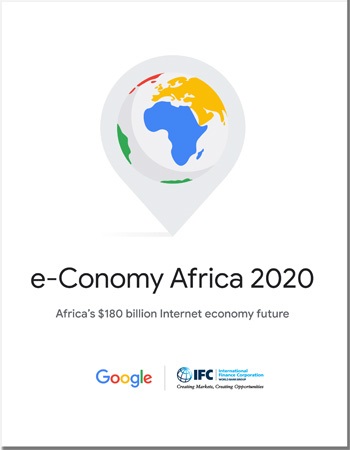
Google and the International Finance Corporation (IFC have estimated that Africa’s Internet economy has the potential to reach 5.2 per cent of the continent’s gross domestic product (GDP) by 2025, contributing nearly $180 billion.

The report titled, e-Conomy Africa 2020, projects potential contribution could reach $712 billion by 2050. The driving this growth is a combination of increased access to faster and better quality Internet connectivity, a rapidly expanding urban population.

Also, a growing tech talent pool, a vibrant startup ecosystem, and Africa’s commitment to creating the world’s largest single market under the African Continental Free Trade Area. 

Currently, Africa is home to 700,000 developers and venture capital funding for startups has increased year-on-year for the past five years, with a record $2.02 billion in equity funding raised in 2019, according to Partech Ventures Africa. 

, SiliconNigeria

Interim Managing Director, Executive Vice President and Chief Operating Officer of IFC, Stephanie von Friedeburg said, “The digital economy can and should change the course of Africa’s history. This is an opportune moment to tap into the power of the continent’s tech startups for much-needed solutions to increase access to education, healthcare, and finance, and ensure a more resilient recovery, making Africa a world leader in digital innovation and beyond.”

Digital startups in Africa are driving innovation in fast-growing sectors, including fintech, healthtech, media and entertainment, e-commerce, e-mobility, and e-logistics, contributing to Africa’s growing Internet gross domestic product (iGDP) — defined as the Internet’s contribution to the GDP.  

“Google and IFC have created this report to highlight the role the digital startup sector is playing and other factors driving the continent’s growth, in order to showcase and support the opportunities the continent presents,” said Google Africa director Nitin Gajria. 

An analysis within the report, conducted by Accenture, found that in 2020, the continent’s iGDP may contribute approximately $115 billion to Africa’s $2.554 trillion GDP (4.5 per cent of total GDP). This is up from $99.7 billion (3.9 per cent of total GDP) in 2019, with the potential to grow as the continent’s economies develop. 

Investments in infrastructure, consumption of digital services, public and private investment, and new government policies and regulations will play an important role in supporting Africa’s digital growth. The report notes that investment in digital skills will also need to increase in order to help drive technology usage and continue to grow the continent’s talent pool. 

The report is available for review and download here.

Continue Reading
Advertisement Advertisement
Click to comment

Leave a Reply

Your email address will not be published. Required fields are marked *

Africa Region

Standard Chartered Joins Temenos Partner Programme

Published

on

, SiliconNigeria

Through the integration, financial institutions (FIs) on the Temenos platform will benefit from a faster go-to-market in accessing the Standard Chartered’s extensive currencies offering, allowing them to price services across more than 130 currencies and 5,000 currency pairs while managing exposure risks to FX market volatility.

The integration releases the strain on inhouse technology resources, which is considered beneficial for retail banks, wealth managers and payment providers handling low-value or high-volume transactions that sit outside their treasury function.

Continue Reading

Action

Schneider Electric Targets 900m Africans With Sustainable Energy Solutions

Published

on

, SiliconNigeria

Schneider Electric said it is targeting 900 million Africans including 95 million Nigerians with universal access to sustainable energy solutions in rural communities by fostering a greener and more resilient future.

The global energy provider said it is committed to providing access to clean electricity to 50 million by 2025, and 100 million by 2030. To date, 46.5 million people have already benefited from Schneider’s energy access solutions.

The country president, Schneider Electric West Africa, Ajibola Akindele, speaking at the Energy Access Investment Forum (EAIF) conference, held in Lagos, recently, said they have a wide range of Access to Energy solutions suitable for electrifying small homes and micro-enterprises, fundamental public services, up to villages and communities.

“Our mission is to be a global digital partner for sustainability and efficiency, empowering all to make the most of our energy resources, bridge progress and sustainability for all. At Schneider Electric, we call this Life is On,” he said.

Director MEAS, Access to Energy, Schneider Electric, Thomas Bonicel, speaking on Schneider Electric’s Access to Energy (A2E) program, emphasized the program’s mission to empower communities through clean and reliable energy access including training & entrepreneurship programs, social & inclusive business, and investment funds.

“There are over 700 million people across the world without access to energy, 600 million in Africa and 95 million in Nigeria; at Schneider Electric, we have decided to deploy our Access to Energy solutions in Nigeria.

“Our major KPI is the impact measured by the quantity of connected people and with Villaya Flex, our latest innovation, we are ready to support independent electricity access and renewable energy adoption in remote villages and off-grid communities,” he said.

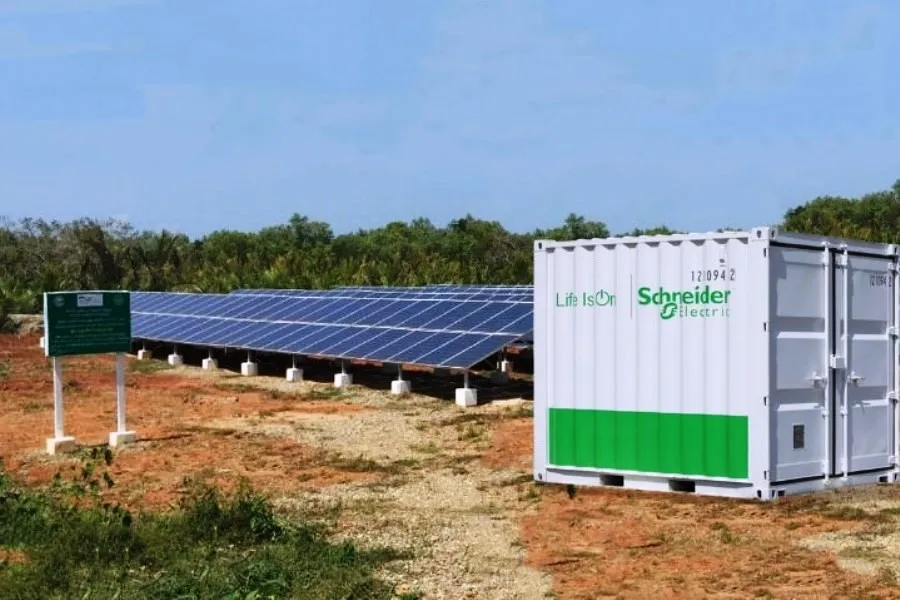
The commercial leader, Microgrid, Schneider Electric, Teina Teibowei, said, Villaya Flex, a packaged, comprehensive microgrid solution, is specifically designed for rural, off-the-grid communities and aims to ensure a dependable and sustainable energy supply to meet daily needs and power productive economic activities in these

Teibowei also noted the Nigerian government and the World Bank’s joint efforts to extend electricity access to rural Nigerian villages, adding that  Schneider Electric’s Villaya Flex microgrid solution is well-positioned to tackle the electrification challenges of these remote communities, potentially serving as a valuable asset for the World Bank’s Nigeria Distributed Access through Renewable Energy Scale-up (DARES) project.

Continue Reading

Africa Region

Mastercard and Payment24 to Boost EMV Adoption in Africa, Others

Published

on

, SiliconNigeria

Mastercard and Payment24 are extending their engagement across Eastern Europe, Middle East and Africa (EEMEA) to help bolster security and drive innovation within the fleet and fuel payment industry across the region.

The EMV standard, now being implemented in over 80 markets, has dramatically reduced the incidence of counterfeit card fraud associated with magnetic strip cards, saving hundreds of millions in potential losses.

This partnership not only drives innovation in the fleet and fuel payments sector, but also aims to speed up the transition to the secure EMV standard and help fleet operators reduce the risk of fraud associated with magnetic strip fleet cards.

This expanded collaboration extends the geographical reach of a proven solution and delivers modern fleet and fuel payment solutions to banks and fleet card issuers throughout the region. While drivers benefit from a quick, secure, and seamless way to make payments, fleet operators can now monitor driver spending in real-time, set expense limits, and minimize the need for cash.

“By combining Mastercard’s leading payment technology with Payment24’s innovative and proven fuel payments platform, we deliver a solution for the region that enhances security and adds significant value and convenience for customers,” said Clyde Rosanowski, Senior Vice President of Commercial Solutions, EEMEA at Mastercard.

Continue Reading

Popular News