Connect with us

Financial

CBN Eases Form ‘M’ Import Permit For 3rd Parties

Published

on

, SiliconNigeria

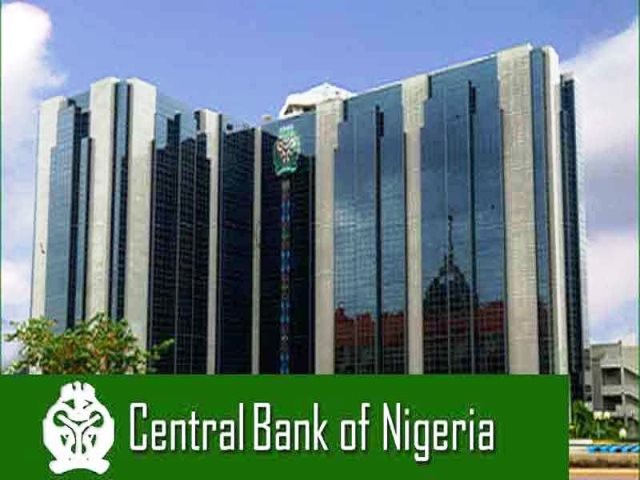
The Central Bank of Nigeria(CBN) said hencef, payment for all Form ‘M’ and letters of credit can be made to manufacturers, suppliers or agents.

The CBN in a circular signed by its director, trade and exchange department, Dr O.S. Nnaji and issued yesterday to all authorized dealers and general public stated that, “further to the Circular Ref. No. TED/FEM/FPC/GEN/01/005 of August 24, 2020 and following different interpretations of the term ‘Ultimate Supplier of products,’ Authorized Dealers and the General public are hereby notified that the provision of ‘Ultimate Supplier of products’ shall be construed to mean the direct party selling the goods to the importer irrespective of whether the party involved is the manufacturer or internationally recognized buying company/ supplier/agent.”

“That the name of the ‘Ultimate Supplier of products’ should be the same as the beneficiary on the Form ‘M’, Invoice, Bill of Exchange, Letter of Credit Instrument and any other relevant document to the transaction.

“That Authorised Dealers should ensure that payments are made only to the beneficiary whose name appears on the documents stated above. That where it is unavoidable that an importer chooses to use a buying company (other than the primary manufacturer), the importer shall make available the following documents (as applicable), for consideration and approval by the CBN before opening Form M.”

It added that, “Detailed KYC and profile of the buying company; three Year Audited Financial Statement of the buying company; Letter of reference from the Buying Company’s banker stating relationship and capacity.

“Transfer pricing policy & arrangements in the home country; Registration with its home country’s Chamber of Commerce; Evidence of tax payments in the home country; Evidence of authorization to act as agents and/or distributor to the original equipment manufacturer. All Authorized dealers are to ensure that the list of eligible third parties that meet the requirements above are submitted to the Bank for authentication before onboarding.”

Continue Reading
Advertisement Advertisement
Click to comment

Leave a Reply

Your email address will not be published. Required fields are marked *

Financial

Adopting AI Responsibly in Public Finance

Published

on

, SiliconNigeria

Artificial intelligence (AI) is rapidly evolving from automating routine tasks to becoming a predictive—and even prescriptive—tool in public finance. At Thursday’s New Economy Forum Workshop, two panels explored how AI and GovTech are being used across governments, and how to scale responsibly while pushing innovation forward.  

“It’s not about getting one big thing right… [it’s about] getting 32 million things right,” said Edward Kieswetter, Commissioner of the South African Revenue Service. Since introducing AI tools like chatbots, biometric facial recognition for e-filing registration, and web-based assistance, South Africa has added $18 billion to its fiscal year revenue. Kieswetter pointed to three key gains: streamlining services for taxpayers, stronger compliance and fraud prevention, and most notably, increased public trust. 

Across OECD countries, “there is no single or even preferred model [of adoption]”, said Delphine Moretti, Working Party Lead on Public Financial Management and Reporting for the OECD. Governments are using AI to forecast economic trends and help inform spending decisions. France and Indonesia, for instance, use AI to monitor fiscal risk at the subnational level through accounting data. Still, oversight bodies, public financial management frameworks, and communities of practice are critical to help manage risk and ensure that innovation leads to real gains. 

In Brazil, AI is also being leveraged for fiscal education. Tania Gomes, Coordinator for Data, Products and Digital Transformation, Treasury of Brazil, showcased “Talk to SICONFI”, a generative AI agent that answers queries on public fiscal data across federal, state, and local levels. Promoting training and digital literacy for AI is just as essential, she added. 

AI tools can be scaled broadly at extremely low costs, but doing so requires strong risk management frameworks and agile governance, says David Hadwick, a researcher at the Centre of Excellence ‘Digitax’. Spanish Tax Agency’s Chief Information Officer, José Borja Tomé, illustrated this with the agency’s “test-and-pause” approach, underscoring that “assigning responsibility is key”. 

Panelists agreed that policies guiding AI use in public finance should prioritize transparency, fairness, efficiency, and use trusted, high-quality data. Increasingly so, “the metrics of AI ethics correspond to the metrics of performance for these administrations,” Hadwick added.

Culled from IMF.org

Continue Reading

Africa Region

Standard Chartered Joins Temenos Partner Programme

Published

on

, SiliconNigeria

Through the integration, financial institutions (FIs) on the Temenos platform will benefit from a faster go-to-market in accessing the Standard Chartered’s extensive currencies offering, allowing them to price services across more than 130 currencies and 5,000 currency pairs while managing exposure risks to FX market volatility.

The integration releases the strain on inhouse technology resources, which is considered beneficial for retail banks, wealth managers and payment providers handling low-value or high-volume transactions that sit outside their treasury function.

Continue Reading

Financial

Global Payments to Acquire Worldpay for $22.7bn

Published

on

, SiliconNigeria
  • The payments sector is getting a major shakeup, with Global Payments agreeing a $22.7 billion deal to acquire Worldpay from GTRC and FIS while offloading its Issuer Solutions business to FIS for $13.5 billion.

Global Payments says Worldpay provides highly complementary payments, software and commerce enablement technology to merchants and partners worldwide. On a combined basis, the company will serve more than six million customers and enable approximately 94 billion transactions and $3.7 trillion in volume across more than 175 countries.

Cameron Bready, CEO, Global Payments, says: “The acquisition of Worldpay and divestiture of Issuer Solutions further sharpen our strategic focus and simplify Global Payments as a pure play merchant solutions business with significantly expanded capabilities, extensive scale, greater market access and an enhanced financial profile.”

Continue Reading

Popular News